
Kythira is a little unusual when it comes to getting there. Although the island belongs to the Ionian Islands, it sits southeast of the Peloponnese, between mainland Greece and Crete. That position gives you more travel options than you might expect.
You can fly directly from Athens or take a ferry from Piraeus, Neapoli, Gytheio or Kissamos in Crete. Which route makes most sense depends mainly on where you are starting from and whether you want to bring a car.
Where do ferries to Kythira leave from?
Ferries to Kythira depart from four ports:
- Piraeus
- Neapoli
- Gytheio
- Kissamos, near Chania in Crete
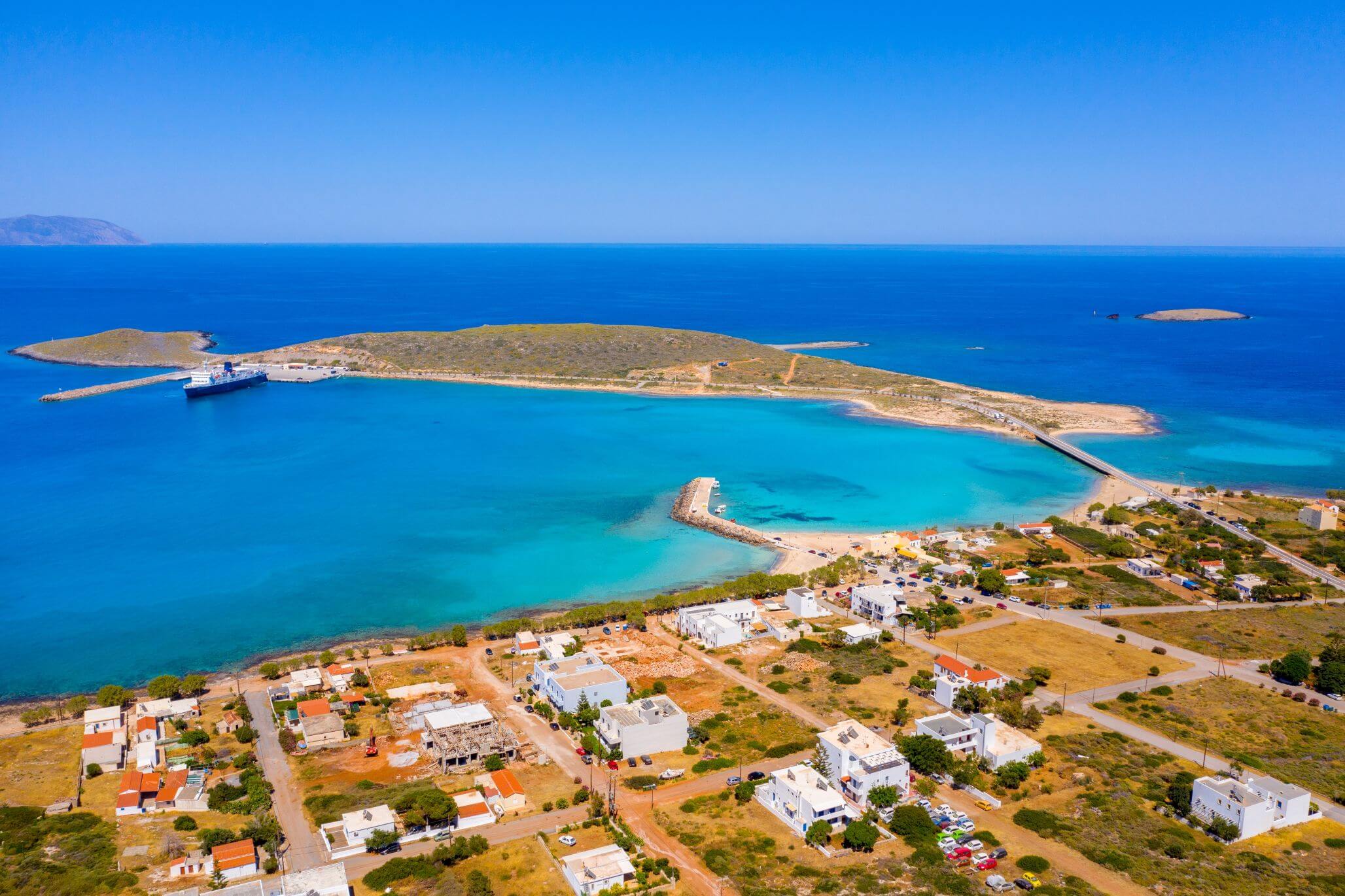
All ferries arrive at Diakofti, Kythira’s main port. From Diakofti, it takes around 40 minutes by car to reach Chora.
If you are travelling with a vehicle in summer, it is worth booking ahead. Car spaces are more limited than passenger seats, particularly on the shorter routes from the Peloponnese.
Piraeus to Kythira by ferry

Taking the ferry from Piraeus is the most straightforward option if you are already in Athens and do not want to drive through the Peloponnese first.
There are two sailings per week from Piraeus to Kythira, operated by Seajets. The journey takes around 6.5 hours.
Passenger tickets cost approximately €22–€32, while cabins start at around €55. Taking a car costs roughly €79–€104, and a motorcycle costs around €20–€28.
You can check Piraeus–Kythira ferry schedules and tickets here.
This route saves you several hours of driving, but you spend considerably longer on the ferry than you would if you crossed from southern Peloponnese.
Getting to Kythira from the Peloponnese
If you have a car, travelling overland from Athens and taking a shorter ferry from the Peloponnese can be a practical alternative.
There are two main departure points: Neapoli and Gytheio.
Neapoli to Kythira
Neapoli is close to the southeastern tip of the Peloponnese. Driving there from Athens takes roughly 4.5 hours.
If you are not driving, KTEL buses also connect Athens with Neapoli, with around two to three services per day. You can check the KTEL Lakonias timetable before travelling.
Ferries from Neapoli to Kythira run daily and are operated by Triton Ferries. The crossing is the shortest of the main ferry routes, taking just 1 hour and 15 minutes.
A passenger ticket costs around €13. Cars cost approximately €45–€50 to transport, while motorcycles cost around €11–€16.
You can check Neapoli–Kythira ferry schedules and tickets here.
For travellers bringing their own car, this is one of the routes where booking early matters. Vehicle capacity can fill up well before passenger seats do.
Gytheio to Kythira
Gytheio is another option if you prefer to do most of the journey by road. The drive from Athens takes approximately 3 hours and 15 minutes.
KTEL buses also run between Athens and Gytheio. Current services are listed on the KTEL Lakonias website.
Ferries leave Gytheio for Kythira twice a week with Seajets, and the crossing takes about 2.5 hours.
Passenger fares are around €9–€16. Transporting a car costs approximately €30–€50, while motorcycles cost around €14–€18.
You can check Gytheio–Kythira ferry schedules and tickets here.
Again, anyone travelling with a vehicle should avoid leaving the booking until the last minute.
Kissamos, Crete to Kythira
Kythira is also connected directly with Crete.
Ferries leave Kissamos, in western Crete, around three times per week with Seajets. The journey takes less than 4 hours and includes a stop at Antikythira.
Passenger tickets cost approximately €13.50–€21, and cabins are available from around €30. A car costs roughly €48–€74 to transport, while motorcycles cost around €15–€19.
You can check Kissamos–Kythira ferry schedules and tickets here.
Kissamos port is about 40 km from Chania, or roughly 45 minutes by car. Buses also run between Chania and Kissamos or the port, although the journey may take longer. Timetables are available on the KTEL Chania-Rethymno website.
Flying to Kythira

Kythira has its own airport, so you do not have to travel by ferry.
There are direct flights from Athens to Kythira, operated by Aegean and Sky Express. The flight takes around 1 hour.
This is the option I chose for my own trip, and it is still the one I would pick if I were travelling from Athens again. I flew to Kythira and rented a car through Discover Cars for the rest of the trip. For me, it was the easiest combination: the flight kept the journey short, and having a car from the start meant I could move around the island without planning my days around transport.
If you are starting elsewhere in Greece or abroad, you can also reach Kythira on a connecting flight via Athens.
Where should you stay in Kythira?
Choosing where to stay matters more in Kythira than it does on some smaller Greek islands because the distances between villages, beaches and sights can add up quickly. Chora, Kapsali, Diakofti, Avlemonas and Agia Pelagia all offer quite different bases, so I would choose the area before booking the hotel itself. I have put the differences, along with the places I think work best for different types of trips, in my guide to the best places to stay in Kythira. It is worth reading before you book, especially if this is your first visit to the island.
Do you need a car in Kythira?
A car makes a big difference in Kythira.
The island is spread out, and many of the places you are likely to want to visit are some distance from one another. Having your own vehicle also gives you much more freedom than relying on local transport.
You can bring your car on the ferry from any of the mainland or Crete departure ports mentioned above. If you fly to Kythira, renting a car after you arrive is another option and, as mentioned above, that is what I chose to do.
For most travellers planning to explore more than one part of the island, a car is the most practical way to get around. It also makes it much easier to plan your days around the places you actually want to see. I have written a 4-day itinerary for Kythira based on my own trip, including the villages, beaches and stops I would prioritise if I were visiting for the first time.


One Response